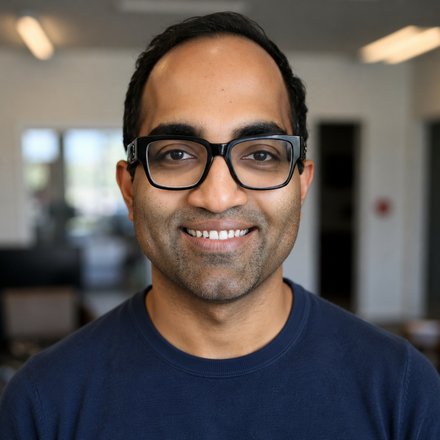
Anand Venkatraman

Hi there! I'm a neurologist with a wide range of interests. This page collects my writings, talks and interviews on various topics which caught my fancy (outside of clinical medicine). I'm looking to connect with like-minded folks from different disciplines.

Topics

Much of the work collated here deals with my evolving ideas on the Hindu sciences of mind, such as Tantra, Mantra and Kundalini Yoga — detailed records of subjective, first-person explorations of Conscious experience by generations of advanced practitioners.

I occasionally also get into cognition, AI, the history of science, and the long history of religious and cultural exchange across ancient civilizations.

Publications

Peer-reviewed and preprint work outside direct clinical neurology. For the complete list, see Google Scholar.

Hindu Introspective Traditions and Modern Cognitive Science

Hindu Ideas on Speech Production Anticipated Modern Scientific Findings
A. Venkatraman, M.G. Prasad, S. Kak, D.H. Mehta — Indian Journal of History of Science 60(2), 2025

Classical Indian philosophy's four-stage model of speech production maps onto distinct aphasiological syndromes in modern neurology.

Un-binding the Umwelt: The Differential Contributions of the Five Classical Senses Can Be Understood Through a Hindu Lens
A. Venkatraman, A. Viswanathan, S.S. Rao — Biosemiotics 18(1), 2025

Hindu Tantra's ordering of the five senses from grossest to subtlest parallels sensorimotor cortex organization and the evolutionary development of sensory cortices across vertebrates.

A Qualia-Centric Approach to Ayurveda and Hindu Knowledge Systems Can Address Modern Science's Blind Spots
A. Venkatraman — Indian Journal of Medical Ethics, 2024

The mismatch in metaphysical lens — not scientific standards — explains most "is Ayurveda scientific" debates; reading it on its own first-person terms dissolves most of them.

Can Consciousness Cease? A Perspective from Hindu Contemplative Traditions
A. Iyer, A. Venkatraman, S. Pandit, R. Ananthanarayanan — OSF Preprints, 2023

In Yoga and Vedānta, deep absorption states that resemble Buddhist nirodha samāpatti are read not as consciousness ceasing but as its clearer revelation.

Tantra and Modern Neurosciences: Is There Any Correlation?
A. Venkatraman, R. Nandy, S.S. Rao, D.H. Mehta, A. Viswanathan — Neurology India 67(5), 2019

Long-practicing Tantrikas documented genuine first-person changes in their nervous systems; this paper proposes a framework for reading those records against modern neuroscience.

Conceptualizing Consciousness as Arousal + Awareness: Historical Parallels from Indian Philosophy
A. Venkatraman, S. Timalsina, P. Opal — Neurology 92 (15 suppl), 2019

Abhinavagupta's 11th-century model of consciousness maps closely onto the modern clinical Arousal + Awareness framework.

Parallels to the Modern Understanding of Speech Production in Indian Philosophical History
A. Venkatraman, P. Opal, M.G. Prasad — Neurology 92 (15 suppl), 2019

Classical Indian philosophers independently arrived at a multi-stage speech-production model that anticipates how modern neurologists describe the same process.

The Brainstem in Emotion: A Review
A. Venkatraman, B. Edlow, M.H. Immordino-Yang — Frontiers in Neuroanatomy 11, 2017

A review of brainstem nuclei and their contribution to the arousal, autonomic, and somatosensory networks underlying emotional experience.

History

Unicorns and Dragons: Does the Bahaj Deeg Seal Link Chinese Religion, the Indus Valley, and Tamil Sangam Era Religious Practices?
A. Venkatraman — SSRN Working Paper, 2026

Whether a single ancient seal motif ties together Chinese, Indus Valley, and Tamil Sangam religious imagery.

Commentary

Greater Freedom of Speech on Web 2.0 Correlates with Dominance of Views Linking Vaccines to Autism
A. Venkatraman, N. Kumar, N. Garg — Vaccine, 2015

Anti-vaccine views dominated the least-moderated platforms, suggesting platform moderation shapes which views the public actually encounters.

Zika Virus Misinformation on the Internet
A. Venkatraman, D. Mukhija, N. Kumar, S.J.S. Nagpal — Travel Medicine and Infectious Disease 14(4), 2016

Early Google and Bing results during the Zika outbreak often contradicted CDC guidance — an early study of search-engine misinformation in a live epidemic.
Talks & Interviews

Full-length talks and conversations, mostly with research forums focused on Indology, classical Indian thought, and science.

Hindu Introspective Traditions and Modern Cognitive Science

Kashmir Shaivism As Neuroscience: Harvard Doctor Decodes Ancient Tantra
Sangam Talks — 1:01:06

Abhinavagupta's Kashmir Shaivite philosophy — prakāśa-vimarśa, "inner touch," memory — read as a first-person account of the nervous system.

Split Brains, Julian Jaynes: Neuroscience in Indology
Centre for Indic Studies — 1:49:54

Julian Jaynes's bicameral-mind hypothesis and split-brain research in conversation with classical Indic ideas about mind and self.

Beyond Grammar: Esoteric Neuroscience of the Sanskrit Alphabet (with Giriratna Mishra)
Centre for Indic Studies — 2:17:50

With Giriratna Mishra, on the esoteric tradition that treats Sanskrit's alphabet and grammar as encoding something deeper than ordinary language.

Matrika, Malini and Mantra (with Giriratna Mishra)
Sangam Talks — 1:51:02

On mātṛkā śakti, the mālinī ordering of the Sanskrit alphabet, and how mantra practice draws on both to work with kundalini energy.

Mrityu (Death): The Great Journey to Self (with Giri Ratna Mishra)
Sangam Talks — 1:35:10

Hindu philosophy frames death as a transition that is in a real sense illusory; in conversation with what science knows about the dying process.

Meditation, Yoga and the Nervous System
Grand Rounds Lecture, UAB Neurology, 2017 — 23:35

A Grand Rounds lecture surveying what's known about how meditation and yoga affect the nervous system.

Commentary

Politically Incorrect Questions About Science in India (with Prof. Gautam Desiraju)
Atharva Forum — 1:04:21

A candid conversation with crystallographer Gautam Desiraju on why Indian science hasn't matched the country's talent, and why that's about institutional culture rather than ability.

Interview of Yogesh Kalkonde for AINA
50:24

An interview with Dr. Yogesh Kalkonde on his work in rural public health and neurology in India.

Brain Networks, Biological Cognition & AI (with Dr. Sharan Srinivasan)
Atharva Forum — 1:24:07

What biological brain networks can and can't teach us about building AI.

Background

Anand Venkatraman

I completed neurology residency at the University of Alabama at Birmingham, a neurocritical care fellowship at Harvard Medical School (Massachusetts General Hospital and Brigham and Women's Hospital), and a neuroendovascular surgery fellowship at Prisma Health / University of South Carolina.

The writing and talks on this site sit outside that clinical work. A fuller record, including peer-reviewed publications, is on my Google Scholar profile.

Earlier in life: a gold medal at the International Biology Olympiad (Beijing, 2005), attendance at the Indian National Chemistry Olympiad (2005), All India Rank 1 in the CBSE Class XII exams (2005), a National Talent Search Scholarship, and a KVPY scholarship. I'm also on Twitter.

Clinical Practice

Day to day, I practice interventional and critical care neurology, treating acute stroke and neurological emergencies via telemedicine and in person.

FAQ

What's the connection between Hindu philosophy and neuroscience?

Several Hindu contemplative traditions — Tantra, Mantra, Kundalini Yoga — kept centuries of detailed first-person records of altered states, subtle-body experience, and attention. My work reads those records on their own terms and traces where they overlap with what modern neuroscience has independently found about arousal, awareness, and sensory processing.

Is this religious advocacy, or a scientific claim?

It's not advocacy in the sense of asking anyone to adopt a practice or belief. It is a substantive claim: that the first-person methods these traditions developed over centuries access something about consciousness that a purely third-person, materialist approach can miss, without taking anything away from what third-person science has accomplished.

Where should I start if this is new to me?

For the original framing, start with Tantra and Modern Neurosciences: Is There Any Correlation? For a more accessible overview, watch Kashmir Shaivism As Neuroscience.

What's your background?

I'm a practicing neurologist — trained at the University of Alabama at Birmingham and Harvard Medical School — who writes on these topics independently, outside clinical work. More in Background.

Can I discuss a specific paper or talk?

Yes — every entry under Publications and Talks has its own comment thread. Click "Show comments" under any entry.